

Brustein, Ram
Research
Black Holes; Cosmology; Gravitation; String theory
Responsibilities
- Teaching Related (Coordinator - Math)
- Teaching Related (Coordinator - Service Courses)
Research Group
- Shani Avitan — PhD student
- Hagar Meir — PhD student
- Tamar Simhon — PhD student
Past Graduate Students
- Tom Shindelman — PhD (2025)
- Lilian Saiegh — MSc (2024)
- Chana Hausmann — MSc (2023)
- Yoav Zigdon — PhD (2023), MSc (2019)
- Yotam Sherf — PhD (2023), MSc (2018)
- Ira Wolfson — PhD (2019), MSc (2018)
- Itay Raveh — MSc (2019)
- Amos Yarom — PhD (2018)
- Yael Raveh — MSc (2018)
- Daniel Levy — PhD (2018)
Past Undergraduate Students
- Lipaz Aspir (2021)
* Past students / postdocs data might be incomplete
Research Highlights
Quantum gravity & quantum black holes
Are Einstein's equations and general relativity compatible with quantum mechanics? In spite of intense efforts over the last 40 years by some of the best physicists we still do not know the answer .
I study the properties of black holes and other space-times with horizons to probe the laws of quantum gravity. Based on our recent research, our proposed answer is: Yes. The apparent incompatibilities between general relativity and quantum mechanics originate from the extreme approximation of treating spacetime as a strictly classical geometric object.
Cosmology
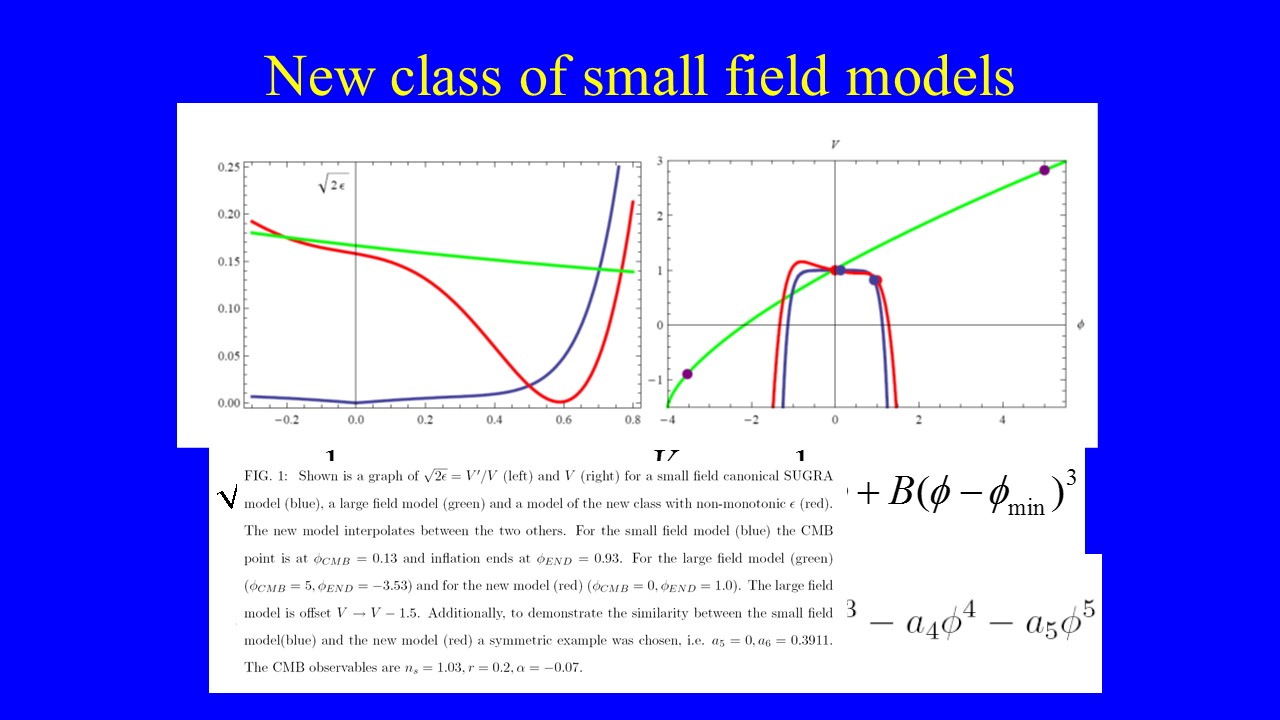
The early universe is used as a theoretical laboratory for studying fundamental physics, the laws of gravity and quantum mechanical aspects of matter under extreme conditions.
We study models of cosmic inflation in the early universe and dark energy in the late universe and their possible realizations in quantum field theory and string theory models.
Our recent research focuses on models of high-scale inflation which produce an observable signal of gravitational waves in the cosmic microwave background.